

Physical Therapy for Back Pain: A 2026 Guide
Table of Contents
- What to Expect During a Physical Therapy Session for Back Pain
- Exercises for Lower Back Pain That Build Core Stability
- How Long Does Physical Therapy Take for Back Pain?
- Holistic Pain Management Strategies That Complement Physical Therapy
- Manual Therapy Techniques and Postural Correction
- Home-Based Equipment vs. Spa-Based Therapy
- Insurance and Cost Navigation for Physical Therapy
- Post-PT Maintenance Plan for Long-Term Relief
- Frequently Asked Questions
Last Updated: September 19, 2026
What to Expect During a Physical Therapy Session for Back Pain
Physical therapy for back pain is a structured, non-invasive treatment approach that combines physical assessment, therapeutic exercise, and hands-on techniques to reduce pain and restore functional mobility. At C3 Wellness Spa, our licensed physical therapists build personalized rehabilitation protocols around your specific condition, whether you’re dealing with a herniated disc, sciatica, or chronic lumbar pain.
The Initial Evaluation
Your first visit is longer than follow-up sessions, typically 60 minutes, because it is an evaluation, not a workout. Expect your therapist to walk through four things:
- History. When the pain started, what makes it better or worse, whether it radiates below the knee, and whether you’ve had episodes before. This is where your therapist screens for red flags (see below).
- Movement exam. How your lumbar spine flexes, extends, rotates, and side-bends; how you sit-to-stand, squat, and walk; and whether one hip or leg is weaker than the other.
- Strength and neurological screen. Testing of the deep abdominal and gluteal muscles, plus reflexes, sensation, and leg strength if nerve involvement is suspected.
- Functional goals. What you actually need to get back to, lifting a toddler, sitting through a workday, running, or simply sleeping through the night. Treatment is built backward from that.
What a Typical Follow-Up Session Looks Like
Most follow-up sessions run 45 to 60 minutes and follow a consistent structure:
- Assessment and pain check-in
- Manual therapy or tissue mobilization
- Therapeutic exercise for core stabilization and flexibility
- Modality application if needed (heat, cold, electrical stimulation)
- Home exercise program review
Direct Access and Referral Rules
In most states you can see a physical therapist without a physician referral, this is called “direct access (Direct Access Advocacy).” The specifics vary: some states allow unrestricted direct access, some limit the number of visits before a referral is required, and some require a referral for certain conditions or for Medicare patients. A practical rule: call the clinic before you book and ask whether your state and your insurance plan require a physician referral first.
Red Flags That Change the Plan
A physical therapist is trained to screen for symptoms that suggest something other than a mechanical back problem. Tell your therapist, and see a physician, if you have any of the following:
- Loss of bladder or bowel control, or numbness in the saddle area
- Progressive weakness in one or both legs
- Unexplained weight loss, fever, or night pain that wakes you
- A history of cancer, recent significant trauma, or long-term steroid use
- Pain that is worse at rest and does not change with position
Exercises for Lower Back Pain That Build Core Stability
Core stabilization is the foundation of any effective exercise program for lower back pain. The muscles surrounding your lumbar spine need to support it during daily movement, and when they’re weak, your spine absorbs forces it wasn’t designed to handle.
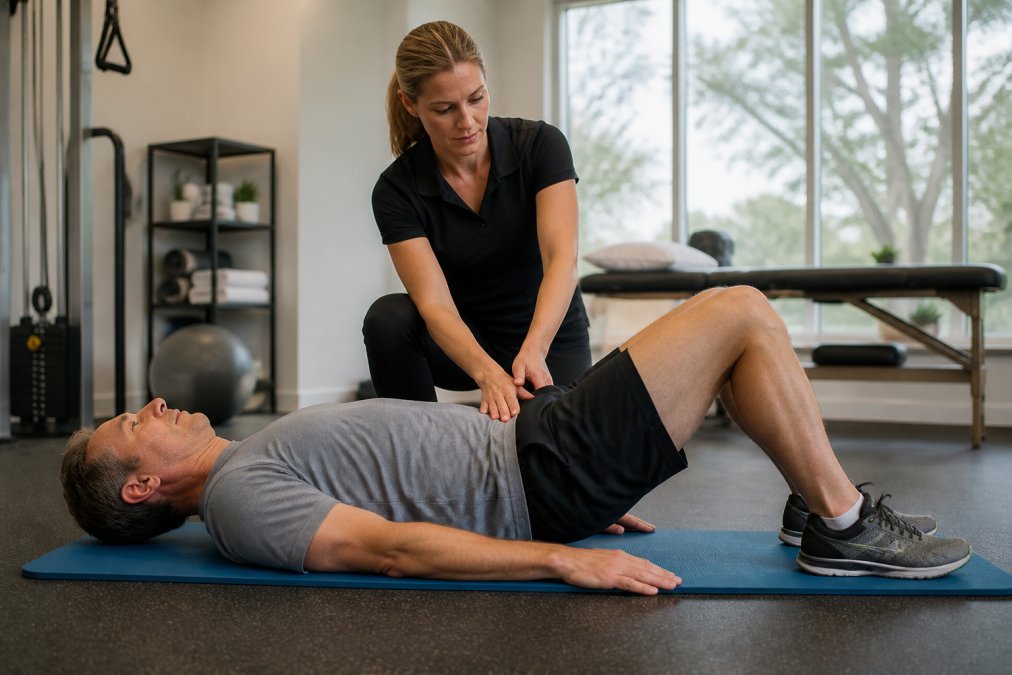
Pelvic Tilts and Bridges: Foundation Movements
Pelvic tilts. Lie on your back with knees bent and feet flat. Gently contract your abdominal muscles to flatten your lower back against the floor, you should feel a small, not forceful, movement. Hold for five seconds, then release. Aim for two sets of ten.
Bird Dogs and Dead Bugs: Advanced Core Stabilization
Bird dogs. Start on hands and knees with a neutral spine. Extend one arm and the opposite leg until both are roughly parallel to the floor, hold for three to five seconds, and return. Alternate sides. Two sets of eight per side. Keep your hips level, if they rotate, you’ve gone past your control point.
How to Progress, and When to Stop
Progress by adding repetitions or hold time before adding load. A reasonable progression is: master pelvic tilts and bridges for one to two weeks, then add bird dogs and dead bugs, then add resistance bands or light weights once bodyweight movements feel easy and pain-free.
How Long Does Physical Therapy Take for Back Pain?
Most people attend physical therapy for back pain for six to twelve weeks, depending on the severity of their condition and how consistently they follow their home exercise program. Acute injuries may resolve in four to six weeks. Chronic conditions often need longer.
- How long you’ve had the pain
- Whether there’s nerve involvement like sciatica
- Your baseline strength and flexibility
- How faithfully you complete home exercises
Holistic Pain Management Strategies That Complement Physical Therapy
Physical therapy works best when paired with complementary approaches that address the whole person, not just the injured tissue. Chronic pain management requires attention to stress, sleep, and overall musculoskeletal health.
Manual Therapy Techniques and Postural Correction
Manual therapy is a hands-on approach where your therapist uses skilled movements to mobilize joints and soft tissues. Techniques include tissue mobilization, joint mobilization, and neuromuscular re-education, all aimed at restoring normal movement patterns.
Home-Based Equipment vs. Spa-Based Therapy
Home-based therapy uses minimal equipment: a mat, resistance bands, and maybe a stability ball. The advantage is convenience and consistency. You can complete your home exercise program in fifteen minutes without leaving the house, which matters when your schedule is unpredictable.
|
Factor |
Home-Based |
Spa-Based |
|---|---|---|
|
Equipment cost |
Low |
Included in Service |
|
Convenience |
High |
In McKinney |
|
Exercise variety |
Limited |
Extensive |
|
Best for |
Early rehab, maintenance |
Advanced strengthening |
|
Consistency |
Easier to maintain |
Requires scheduling |
Insurance and Cost Navigation for Physical Therapy
Insurance coverage for physical therapy varies widely by plan. Most major medical plans cover physical therapy when it’s medically necessary and prescribed by a physician, though visit limits and copays differ. If you have VA benefits, coverage for physical therapy related to service-connected conditions is typically available, but you’ll want to confirm your specific authorization before starting.
A few practical steps to avoid surprise bills:
- – Call your insurer and ask about your physical therapy benefit, including visit caps
- – Confirm whether you need a physician referral first
- – Ask whether the C3 Wellness Spa is in-network – We are in network for most major insurers and VA
- – Request an estimate of coverage, co-pays, co-insurance, and visit limits before your first appointment
Post-PT Maintenance Plan for Long-Term Relief
The biggest gap in most rehabilitation protocols is what happens after formal therapy ends. Without a maintenance plan, gains fade and pain returns.
Frequently Asked Questions
Does physical therapy really work for back pain?
Yes. Physical therapy is a first-line, non-invasive treatment for most types of back pain, including sciatica and herniated disc issues. A physical therapist uses therapeutic exercise, manual therapy, and patient education to reduce pain intensity, improve range of motion, and prevent recurrence. Research consistently shows that active rehabilitation outperforms passive treatments like bed rest alone. For chronic pain management, a structured rehabilitation protocol that includes core stabilization and flexibility training gives you tools to manage symptoms long after sessions end.
What are three exercises that can help with lower back pain?
Pelvic tilts, bird dogs, and bridges are three foundational exercises for lower back pain. Pelvic tilts gently mobilize the lumbar spine and reduce stiffness. Bird dogs engage core stabilization while teaching spinal alignment. Bridges strengthen the glutes and hamstrings, which support the lower back and reduce strain. A physical therapist can tailor these to your specific condition, whether you have a herniated disc, sciatica, or general muscle atrophy. Start with slow, controlled movements and stop if pain worsens.
What should I expect during my first physical therapy session for back pain?
Your first visit typically includes a physical assessment where the therapist reviews your history, evaluates posture, tests range of motion, and identifies movement patterns contributing to pain. You may receive manual therapy, tissue mobilization, or modality application for symptom relief. The therapist then designs a treatment plan that includes a home exercise program. Expect the session to last 45 to 60 minutes. Wear comfortable clothing and be ready to discuss your goals and daily activities that may affect recovery.
How long does it take for physical therapy to help back pain?
Most people notice meaningful improvement within 4 to 6 weeks of consistent physical therapy, though timelines vary based on the cause and severity of pain. Acute strains may resolve in 2 to 3 weeks. Chronic conditions like degenerative disc disease or sciatica often require 8 to 12 weeks of rehabilitation. Attending sessions regularly and completing your home exercise program between visits significantly affects how quickly you progress. Your therapist will reassess and adjust the plan as your functional mobility improves.
Is physical therapy better than medication for chronic back pain?
For chronic back pain, physical therapy is generally preferred over long-term medication because it addresses root causes like muscle weakness, poor posture, and limited flexibility rather than masking symptoms. Non-invasive treatment through therapeutic exercise and manual therapy carries fewer side effects than ongoing opioid or NSAID use. Many physicians now recommend physical therapy as a first step before prescribing medication. Combining both under a doctor’s supervision may be appropriate for severe pain, but the goal is always to build strength and mobility so you rely less on medication over time.
What holistic pain management strategies complement physical therapy?
Holistic pain management strategies include acupuncture, massage therapy, stress reduction techniques, and anti-inflammatory nutrition. Acupuncture can help with pain modulation and stiffness reduction. Massage therapy supports tissue mobilization and circulation. Mind-body practices like deep breathing and meditation address the psychological impact of chronic pain, which is often overlooked. When combined with a structured physical therapy program, these approaches support musculoskeletal health from multiple angles and can improve your overall rehabilitation outcome.
How do I know if my insurance covers physical therapy for back pain?
Most major medical insurance plans cover physical therapy when it is medically necessary and prescribed by a physician. Coverage details, including visit limits and copays, vary by plan. If you have VA benefits, physical therapy for service-connected back conditions is often covered, but you should confirm eligibility and authorization requirements with the VA or your provider. Before starting treatment, contact your insurance company to verify benefits and ask whether pre-authorization is needed. A reputable clinic will help you navigate the paperwork and explain your options.