

Benefits of Integrated Wellness Treatments: A How-To Guide
Table of Contents
- What Are Integrated Wellness Treatments and How They Work
- The Real Benefits of Integrated Wellness Treatments
- Integrative Medicine Benefits: Why a Coordinated Approach Works
- Massage and Acupuncture Benefits When Combined with Other Therapies
- Integrated Wellness vs Separate Specialists: What the Evidence Shows
- Is a Wellness Membership Worth It? Evaluating Your Options
- Your First Steps: How to Start With Integrated Wellness Treatments
- Common Mistakes to Avoid When Beginning Integrated Wellness Treatments
- Frequently Asked Questions
Last Updated: October 18, 2026
What Are Integrated Wellness Treatments and How They Work
Integrated wellness treatments combine multiple healing approaches under one roof to address your whole health picture at once. Instead of visiting a massage therapist one day and a physical therapist the next, your providers work together on the same goals.
At C3 Wellness Spa in McKinney, your massage therapist, acupuncturist, physical therapist, and esthetician share notes and adjust your plan based on what’s working, a team effort instead of isolated visits.
Your team reviews your history and concerns, then layers therapies strategically: acupuncture and massage for inflammation, physical therapy to rebuild strength, and skincare and wellness services to support recovery between appointments.
Coordination is the real difference: a massage therapist who knows your PT is working on posture targets the right muscles, and your acupuncturist knows which pressure points support your PT goals.
Your body doesn’t compartmentalize pain or stress: tight shoulders affect posture, which strains your lower back, which limits mobility. Integrated wellness treatments address these connections at once instead of treating each symptom separately.
The Real Benefits of Integrated Wellness Treatments
The biggest benefit is faster, more lasting results. When your providers coordinate, you’re not working against conflicting advice or undoing progress between appointments.
Many people try single therapies first: a massage feels great for three days, then pain returns because the underlying issues never resolve. Massage can’t fix posture, physical therapy can’t address stress-related tension, and acupuncture can’t rebuild strength.
Together, your massage therapist prepares muscles for PT, your PT rebuilds strength that prevents re-injury, and your acupuncturist reduces inflammation between sessions. Each therapy makes the others more effective.
Another benefit is personalization: your team pivots when an approach isn’t working and intensifies where you’re progressing.
The wellness membership model at C3 Wellness Spa makes consistent, coordinated care accessible.
The key to results is consistency plus coordination. One massage helps temporarily. Regular massages with a physical therapist actively rebuilding your strength creates real change. That’s the difference integrated wellness makes.
Integrative Medicine Benefits: Why a Coordinated Approach Works
Integrative medicine benefits come from treating you as a connected system, not a collection of separate problems. Your nervous system, muscles, circulation, and mental state all influence each other constantly (ncbi.nlm.nih.gov).
Coordinated providers work with your body’s natural healing: your massage therapist keeps muscles pliable for the PT rebuilding strength, your acupuncturist supports circulation and inflammation control, and your esthetician’s skincare supports your immune system.
Isolated treatments plateau because your massage therapist can’t address the postural habits behind your tension, your PT can’t manage the stress that tightens muscles, and your acupuncturist can’t rebuild lost strength. Together, they remove the obstacles to real recovery.
Integrative medicine benefits extend to specific conditions: chronic pain responds better to combined treatment, injury recovery accelerates when physical therapy, massage, and targeted wellness services work together, and skin health improves when you address stress, circulation, and nutrition alongside topical treatments.
Coordinated care can lead to better outcomes, faster recovery, and longer-lasting results than isolated treatments, not because any single therapy is weak, but because your body responds better when everything works together.
Integrated wellness treatments work because they address the root causes of your problems, not just the symptoms. That’s why results last.
Massage and Acupuncture Benefits When Combined with Other Therapies
Massage and acupuncture are powerful on their own. Combined with other therapies, they become transformative.
Massage and acupuncture benefits multiply when paired with physical therapy. Massage reduces tension and improves circulation; acupuncture triggers natural pain relief and reduces inflammation. Without strength rebuilding, though, you return to old movement patterns. Physical therapy fixes those patterns, so the three solve the problem instead of temporarily relieving it.
Add stress-reduction services and recovery accelerates further. Chronic stress tightens muscles and blocks healing, so reducing stress while releasing muscle tension and supporting circulation helps your whole system recover faster.
The timeline for progress can vary. Coordinated massage, acupuncture, physical therapy, and stress management can support your journey toward resolving the problem.
Massage and acupuncture benefits also expand when combined with professional skincare and wellness services: your skin reflects your overall health, so addressing stress, poor circulation, and inflammation through integrated treatment improves your skin alongside your pain or mobility.
At C3 Wellness Spa, therapists coordinate massage and acupuncture with your other treatments: your massage therapist focuses on muscles that respond best to acupuncture, and your acupuncturist times sessions to support your PT work. Each therapy does more.
Integrated Wellness vs Separate Specialists: What the Evidence Shows
Many people ask whether integrated wellness vs separate specialists actually matters. The answer is clear: coordination produces better results.
With separate specialists, each works independently: your massage therapist doesn’t know what your PT recommended, your acupuncturist doesn’t see your PT notes, and you’re left connecting the dots, often with conflicting advice or therapists working at cross-purposes.
Integrated wellness centers solve this: all providers see the same information, discuss your case, and adjust together, removing confusion and accelerating progress.
The practical differences are significant:
- Communication: Separate specialists rarely communicate. Integrated teams do. This prevents conflicting advice and wasted effort.
- Efficiency: Integrated wellness centers know your history and goals. Separate specialists start from scratch each time.
- Adaptation: When you’re not progressing, integrated teams quickly identify why and adjust. Separate specialists might never know you’re stuck.
- Cost: Integrated wellness memberships can offer value compared to paying separately for the same services, especially over time.
- Convenience: One location, coordinated scheduling, and fewer total appointments save time and money.
The evidence on integrated wellness vs separate specialists shows better outcomes with coordination, faster recovery, longer-lasting results, higher satisfaction, not because integrated practitioners are better individually, but because coordination beats fragmentation. This synergy becomes even more precise when integrating lab results with real-time biometric data to refine the ongoing management of a patient’s health profile.
For people in McKinney managing chronic conditions or recovery from injury, the difference is substantial. You get results instead of temporary relief. (Source: a 2023 report by the Centers for Disease Control and Prevention (CDC))
The biggest mistake is assuming all wellness centers are the same. Some are just multiple practitioners in one building with no coordination. True integrated wellness means your team actively communicates and adapts together. That’s what creates results.
Is a Wellness Membership Worth It? Evaluating Your Options
This is the question most people ask: Is a wellness membership worth it? The answer depends on your situation, but for most people seeking regular, coordinated care, the answer is yes.
Calculate what you’d spend on individual appointments over a year, then compare to membership options. Memberships can offer value when used consistently.
But cost is only part of the decision. Consider these factors:
- Consistency: Memberships encourage regular appointments because you’ve already paid. This consistency is crucial for lasting results. People who pay per visit often skip appointments when money is tight. This breaks progress.
- Coordination: Memberships at integrated centers like C3 Wellness Spa in McKinney include coordinated care. This adds value that individual appointments don’t provide.
- Flexibility: Good wellness memberships offer flexible options. You might use more massage one month and more physical therapy another. Membership models accommodate this. Pay-per-visit doesn’t.
- Convenience: One location, one team, one billing. This simplicity removes barriers to care.
- Long-term value: If you’re managing a chronic condition or committed to ongoing wellness, membership can offer value compared to pay-per-visit over time.
The real question isn’t whether membership is worth it. It’s whether you’re committed to regular care. If yes, membership saves money and improves results. If you only want occasional appointments, pay-per-visit might work.
| Approach | Best For | Typical Commitment | Cost Advantage |
|---|---|---|---|
| Pay-per-visit | Occasional appointments | As needed | None long-term |
| Wellness membership | Regular coordinated care | 2-4x monthly | Saves 20-40% |
| Combination | Mix of regular + occasional | Flexible | Best for most people |
Your First Steps: How to Start With Integrated Wellness Treatments
Starting with integrated wellness treatments is simpler than most people think. You don’t need a referral or special preparation. You just need to take the first step.
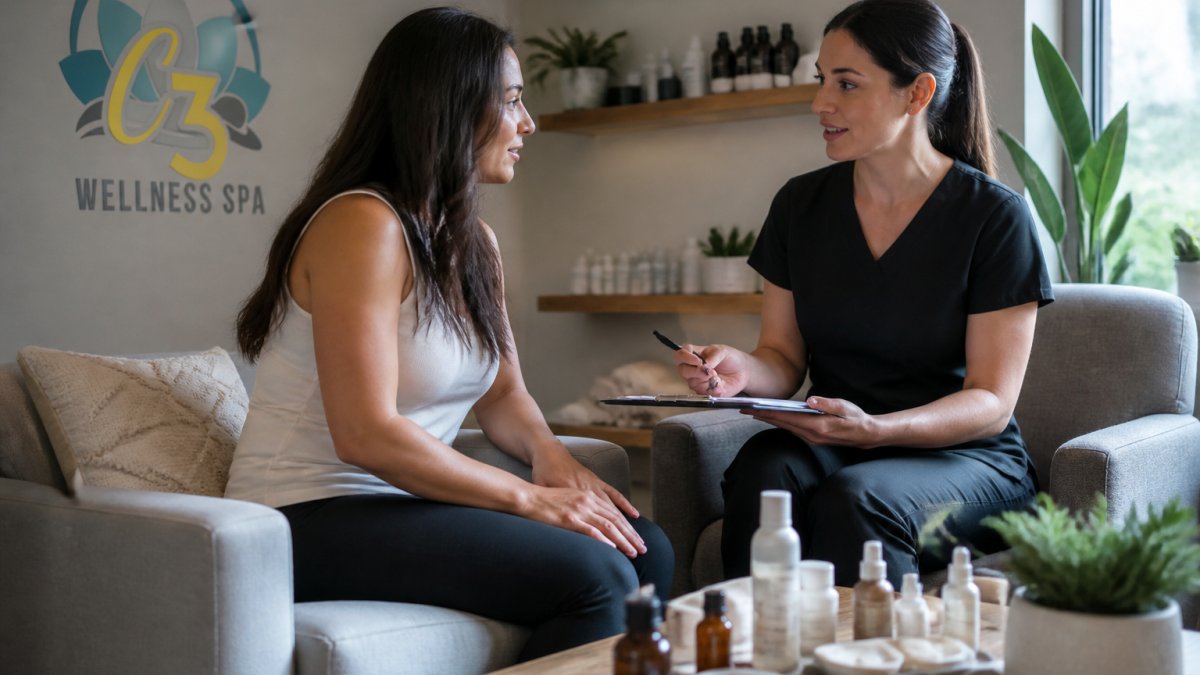
First, schedule a consultation.
Your consultation includes an assessment, range of motion, posture, or pain levels, that becomes your baseline for measuring progress later.
Next, your team builds a personalized plan specific to you: maybe massage to reduce acute pain, then physical therapy to rebuild strength, or acupuncture for inflammation combined with stress-reduction services.
Then commit to the plan. Integrated wellness works because of consistency plus coordination; sporadic appointments won’t deliver real results. You need regular sessions over weeks or months.
Start with the frequency your team recommends. This might be twice weekly for the first month, then weekly for two months, then monthly maintenance. Follow their guidance. They know what works.
Track your progress: note your pain, energy, sleep, and stress. These changes matter more than any test, your subjective experience is real data.
Adjust as you go. If something isn’t working, tell your team. They’ll modify the plan. This flexibility is part of integrated wellness. You’re not locked into one approach.
Integrated wellness memberships work best for people committed to regular care over 3-6 months. If you want quick fixes, this isn’t for you. If you want lasting results, this is exactly what you need.
Common Mistakes to Avoid When Beginning Integrated Wellness Treatments
Most people starting integrated wellness treatments make the same mistakes. Knowing what to avoid saves time and money.
Mistake 1: Expecting instant results. Integrated wellness works, but not overnight. Your body needs weeks to adapt to new movement patterns, release chronic tension, and rebuild strength.
Mistake 2: Skipping appointments. Consistency is everything. Missing appointments breaks momentum. Your muscles forget new patterns. Inflammation returns. Progress stalls. Commit to the schedule your team recommends.
Mistake 3: Ignoring advice between appointments. Your team gives you homework, stretches, posture adjustments, stress-reduction practices.
Mistake 4: Trying too many things at once. Some people want massage, acupuncture, physical therapy, skincare, and wellness services all in week one.
Mistake 5: Not communicating with your team. If something hurts, feels wrong, or isn’t working, tell them immediately. Don’t suffer through it. Don’t try to tough it out.
Mistake 6: Comparing your progress to others. Your timeline is your timeline. Someone else might improve faster or slower. This doesn’t mean the treatment isn’t working for you.
Mistake 7: Stopping too early. Many people feel better after a few weeks and stop. This is premature. You’ve addressed symptoms, not causes. Continue through the full plan.
Mistake 8: Choosing a center based only on price. The right center can deliver results.
Frequently Asked Questions
What are the main benefits of integrated wellness treatments?
Integrated wellness treatments address your whole health by combining therapies like massage, acupuncture, physical therapy, and skincare under one coordinated plan. This approach allows practitioners to communicate about your progress, adjust treatments based on how your body responds, and target the root cause of pain or tension rather than isolated symptoms. Many people report faster recovery, reduced chronic pain, improved mobility, and better overall well-being when treatments work together rather than in isolation.
How do integrative medicine benefits differ from traditional separate specialist visits?
Integrative medicine benefits include continuity of care, your team shares information about your condition and treatment response. When you see separate specialists, each provider works independently without full visibility into your other treatments, which can lead to conflicting advice or overlapping services. Integrated practitioners coordinate timing and intensity of treatments, avoid duplicating efforts, and adjust your plan as you progress. This coordination typically results in more efficient healing and a clearer path to your wellness goals.
Can massage and acupuncture benefits be combined safely with physical therapy?
Yes. Massage and acupuncture benefits complement physical therapy when coordinated by qualified professionals. Massage reduces muscle tension before PT sessions, making exercises more effective. Acupuncture can relieve pain that might otherwise limit your ability to participate fully in therapy. Physical therapy builds strength and function that supports the benefits gained from massage and acupuncture. Your integrated wellness team ensures the timing and intensity of each treatment support your overall recovery without overloading your system.
Is a wellness membership worth it compared to paying per visit?
Whether a wellness membership is worth it depends on your frequency of visits and commitment level. Memberships can offer predictable monthly costs, which can help with budgeting. They also encourage consistency, regular treatment is more effective than sporadic visits. If you need ongoing care for chronic pain, injury recovery, or preventive wellness, a membership can offer value and support positive outcomes. For occasional treatments, pay-per-visit may suit you better. Contact C3 Wellness Spa to discuss membership options and compare them to your expected visit frequency.