

Holistic Pain Management for Veterans: A How-To Guide
Table of Contents
- What Holistic Pain Management for Veterans Actually Involves
- Does VA Cover Physical Therapy? What Veterans Need to Know
- How VA Community Care for Physical Therapy Works
- VA Acupuncture for Chronic Pain: What’s Available
- Building Your Holistic Pain Management Plan Step by Step
- Questions to Ask a VA Provider About Pain Treatment
- Common Mistakes That Derail Veteran Pain Management Plans
- Conclusion
- Frequently Asked Questions
Last Updated: October 5, 2026
What Holistic Pain Management for Veterans Actually Involves
Holistic pain management for veterans is a whole-person approach that treats chronic pain through physical therapy, acupuncture, movement, and stress care instead of relying on medication alone. It targets the cause of pain, not just the symptom. At C3 Wellness Spa, we build these plans around each veteran’s injury history, daily routine, and goals.
Chronic pain after service rarely comes from one source. An old knee injury changes how you walk. That change strains your back. Years later, the back hurts more than the knee.
So treating one spot rarely fixes the problem. A holistic plan connects the pieces:
- – Physical therapy to rebuild strength and motion
- – Acupuncture to ease pain signals and tension
- – Massage and stress care to lower muscle guarding
- – Movement work, like Pilates, to protect your progress
The goal is simple: less pain, more function, and fewer pills. The VA’s whole health approach to pain care describes this same model.
Does VA Cover Physical Therapy? What Veterans Need to Know
Yes. VA covers physical therapy when it is part of your treatment plan for a service-connected or approved condition. Your VA provider refers you, and the care is delivered through a VA clinic or an approved community provider.
Coverage depends on your eligibility and your care team’s referral, not on whether you ask for it. Two details decide most cases:
- Is the condition connected to your service or already in your VA health record?
- Has a VA provider written the referral?
If both are yes, physical therapy is typically covered like any other VA-authorized treatment. If you are unsure where you stand, call your VA facility and ask them to check your enrollment and referral status. The VA health benefits page lists the conditions and eligibility rules.
One honest caveat: coverage rules and copays vary by priority group. Confirm your own situation before you book anything.
How VA Community Care for Physical Therapy Works
VA community care for physical therapy lets you see a provider outside the VA system when the VA cannot meet your needs in a reasonable time or distance. The VA pays for approved care, and you get treatment closer to home.
Here is the process in plain terms:
- – Ask your VA provider whether you qualify for community care.
- – Get the referral and authorization before you book.
- – Choose an approved provider. The VA sends the authorization there.
- – Attend your visits. The provider bills the VA, not you.
- – Keep your VA team in the loop on progress.
The last step matters more than people think. Community care works when your outside therapist and your VA provider share notes. Without that, you can end up with two plans that fight each other.
If you are searching for “VA physical therapy near me,” ask which local clinics already accept VA authorization. C3 Wellness Spa accepts most major medical insurance and VA benefits, so veterans can combine therapy, acupuncture, and recovery services under one roof instead of driving across the metroplex.
VA Acupuncture for Chronic Pain: What’s Available
VA acupuncture for chronic pain is available at many VA facilities and through community care, and it is most often used for back pain, neck pain, headaches, and joint pain. It is typically offered as part of a broader pain plan, not as a standalone cure.
Sessions usually run 20 to 40 minutes. Most plans start with a short series of visits, then taper to maintenance. Many veterans report less pain and better sleep, though results vary from person to person.
What most guides miss is the paperwork side. Acupuncture through the VA usually needs a referral, and community acupuncture needs prior authorization. Book the referral first, then the appointment.
Building Your Holistic Pain Management Plan Step by Step
Start with an assessment, then layer treatments one at a time so you can tell what actually helps. Veterans who stack five new treatments in one week rarely know which one worked.
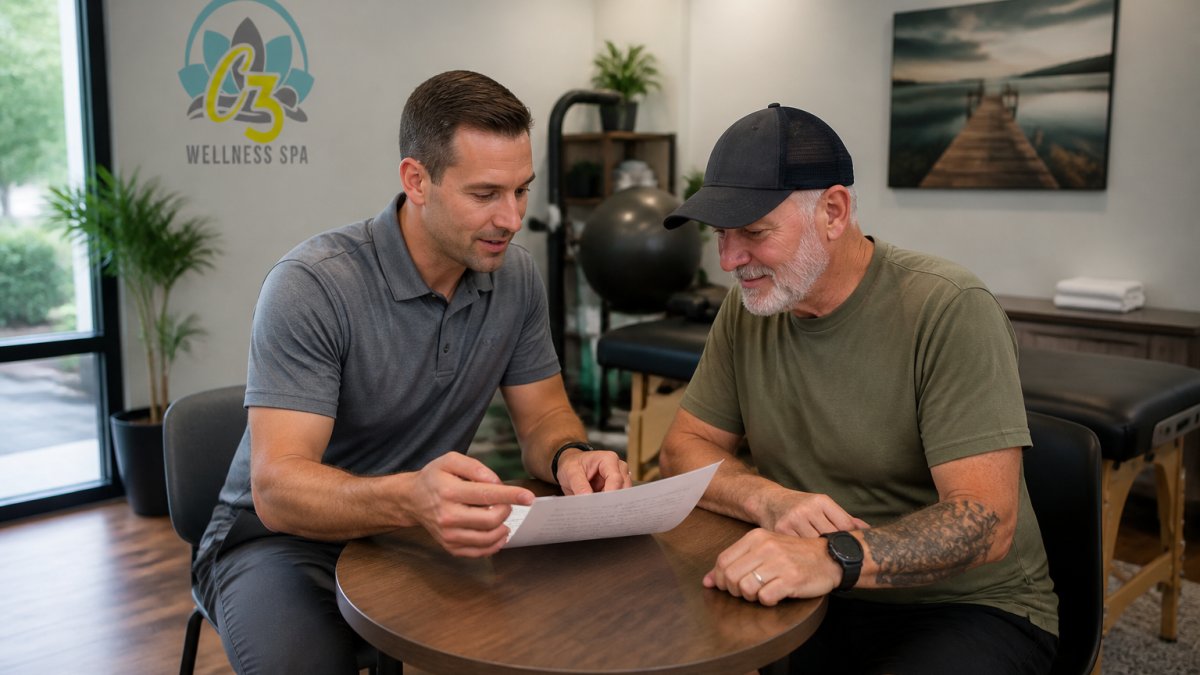
Integrating these personalized care plans often involves exploring how wearable pain management tools can provide consistent support for your physical therapy progress throughout the day.
Here is the sequence we recommend:
- – Get a baseline. Ask your VA provider to document your pain level, motion limits, and current medications.
- – Pick one core treatment. Physical therapy is usually the anchor. Add acupuncture if pain limits your movement.
- – Add recovery support. Massage, stretching, or Pilates can protect the gains from therapy.
- – Set a 6-week checkpoint. Note what changed: sleep, walking distance, pain at rest.
- – Adjust, do not restart. Keep what works. Swap what does not.
- – Build a maintenance rhythm. Two to four sessions a month often holds progress better than bursts of care.
- Write your plan down. A printed plan on the fridge beats an app you never open.
Questions to Ask a VA Provider About Pain Treatment
Ask these questions at your next visit. They turn a vague conversation into a real plan.
- – Is my pain condition covered under my VA benefits?
- – Can I get a physical therapy referral today?
- – Do I qualify for community care, and how long is the wait?
- – Is acupuncture available, and how many sessions are approved?
- – What is the goal of this treatment, and how will we measure it?
- – Which medications can we reduce if this works?
- – Who coordinates my care if I see providers outside the VA?
Bring a written list. Appointments move fast, and it is easy to leave without asking the one question that mattered most.
Common Mistakes That Derail Veteran Pain Management Plans
The biggest mistake is treating appointments as the plan. Appointments are just the delivery. The plan is what you do between them.
Here is what we see go wrong most often:
- – Starting everything at once. You cannot tell what helps when five things change in one week.
- – Skipping the referral step. Without authorization, community care visits may not be covered.
- – Stopping at the first good week. Pain often returns when strength work stops early.
- – Keeping providers siloed. If your therapist and acupuncturist never compare notes, the plan splits.
- – Ignoring sleep and stress. Poor sleep amplifies pain (pubmed.ncbi.nlm.nih.gov). Stress drives muscle tension. Both belong in the plan.
Conclusion
Chronic pain after service is stubborn, and no single treatment fixes it. The veterans who improve are the ones who build a plan, follow it for weeks, and adjust instead of quitting. If you are in North Texas, C3 Wellness Spa can help you put the pieces together in one place. Our team includes physical therapists, acupuncturists, and licensed massage therapists, and we accept most major medical insurance and VA benefits. We also offer flexible memberships and Flex Pass options for veterans whose schedules change week to week. Fill out the form below to start your holistic pain management plan with a team that treats the whole person, not just the sore spot.
Frequently Asked Questions
Does the VA cover physical therapy for veterans?
Yes, VA physical therapy is a covered benefit when it’s part of your approved treatment plan. A VA provider refers you to physical therapy after assessing your pain, mobility, and goals. Coverage depends on your enrollment priority and whether the service is deemed medically necessary. If you’re unsure about your eligibility, ask your VA primary care provider directly, or contact your local VA medical center’s eligibility office for a clear answer about your specific situation.
Can veterans use VA community care for pain treatment?
Eligibility for VA community care depends on factors like wait times, drive distance, and whether the VA can provide the needed service. If you qualify, the VA authorizes care from an approved community provider, often with no out-of-pocket cost to you. Not every veteran qualifies, and approval is handled case by case. Ask your VA care team whether you meet the criteria before booking any outside appointments.
Does the VA offer acupuncture for pain management?
Yes, VA acupuncture for chronic pain is available at many VA facilities as part of its whole-health approach to pain care. Availability varies by location, so check with your local VA medical center. Some veterans access acupuncture through community care when it isn’t offered nearby. Acupuncture is typically used alongside other treatments like physical therapy and behavioral health, not as a standalone replacement for your existing care plan.
What should veterans ask their VA provider about holistic pain management?
Ask which services you qualify for, whether community care is an option, how long referrals take, and what your out-of-pocket costs might be. Also ask how the different treatments, such as physical therapy, acupuncture, and behavioral health, will work together in your plan. Write your questions down before the appointment and bring a list so nothing gets missed during a short visit.