

Acupuncture for Musculoskeletal Pain Relief
Table of Contents
- How Acupuncture for Musculoskeletal Pain Relief Works
- Acupuncture for Back Pain: What to Expect
- Acupuncture for Neck Pain and Tension
- Acupuncture vs Physical Therapy for Pain
- How Many Acupuncture Sessions for Pain Relief?
- Finding a Qualified Acupuncturist in McKinney, TX
- Conclusion
- Frequently Asked Questions
Last Updated: October 9, 2026
How Acupuncture for Musculoskeletal Pain Relief Works
Acupuncture for musculoskeletal pain relief is a treatment method that uses very thin, sterile needles placed at specific points on the body to ease pain in muscles, joints, and connective tissue. At C3 Wellness Spa in McKinney, TX, our licensed acupuncturists use this approach alongside physical therapy to help people move with less pain.
The idea is simple. Pain often comes from tight muscles, poor blood flow, and irritated nerves. Needles placed at key points can calm those areas and help your body respond.
What Happens During a Session
Your first visit starts with a conversation. We ask where it hurts, how long it has hurt, and what makes it worse.
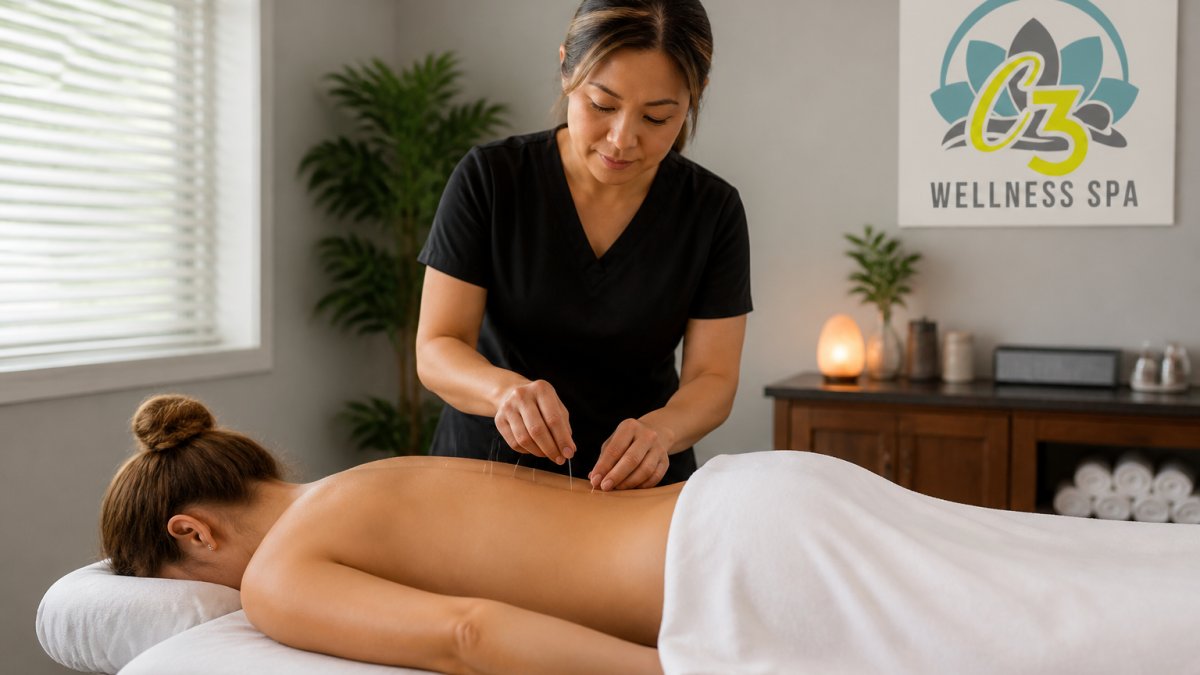
Then you lie down, usually face-down or on your side. The room is quiet and warm. Your acupuncturist places fine needles at points along your back, hips, or neck.
Most people feel little to nothing when the needles go in. Some feel a mild ache or tingle, which is normal. The needles stay in for about 20 to 30 minutes while you rest.
What Acupuncture Can and Cannot Address
Acupuncture helps with many kinds of muscle and joint pain. It works well for:
- Lower back pain and stiffness
- Neck tension and shoulder tightness
- Knee and hip discomfort
- Pain from old injuries that never fully healed
It does not fix broken bones, torn ligaments, or serious nerve damage on its own. Those need medical care first.
Think of acupuncture as one part of a full plan. The National Center for Complementary and Integrative Health overview of acupuncture explains that acupuncture is often used together with other treatments, not instead of them.
Acupuncture for Back Pain: What to Expect
Back pain is the most common reason people seek acupuncture. Results vary.
A typical plan for back pain looks like this:
- Week 1-2: Two sessions per week to calm acute pain
- Week 3-4: One session per week as pain drops
- Week 5+: Sessions every two to four weeks to keep pain away
Your acupuncturist may also suggest stretching, heat, or physical therapy between visits. At C3 Wellness Spa, we pair acupuncture with physical therapy and massage therapy when a patient needs both pain relief, muscle relaxation, and strength work.
Acupuncture for Neck Pain and Tension
Neck pain often comes from desk work, long drives, and stress. The muscles at the base of the skull tighten, and that tightness spreads.
Acupuncture for neck pain targets those tight bands of muscle. Needles go into the upper back, shoulders, and sometimes the scalp. Many patients say their neck feels looser right after the first session. This same principle of stimulating localized healing extends to the lower joints, where natural knee pain remedies often provide a complementary approach to managing persistent musculoskeletal discomfort.
You can also help yourself at home:
- Set your screen at eye level
- Take a short break every 45 minutes
- Use a pillow that keeps your neck in line with your spine
Acupuncture vs Physical Therapy for Pain
Acupuncture and physical therapy do different jobs, and the best plan often uses both.
| Approach | Main Goal | Best For | Typical Session |
|---|---|---|---|
| Acupuncture | Calm pain signals and relax tight tissue | Flare-ups, chronic ache, stress-related pain | 20-30 minutes of needle time |
| Physical Therapy | Build strength and restore movement | Weak muscles, poor posture, injury recovery | 45-60 minutes of exercise and hands-on work |
Acupuncture quiets the pain. Physical therapy fixes what caused it. Massage helps relax the muscles where the pain has irritated.
A common mistake is picking one and skipping the other. If your back hurts because your core is weak, needles alone will not fix it. If your muscles are locked tight, exercise alone may hurt more than it helps.
This is where a combined clinic helps. C3 Wellness Spa has acupuncturists, physical therapists, and massage therapists on one team, so your care plan connects instead of splitting across multiple offices.
How Many Acupuncture Sessions for Pain Relief?
The exact number of sessions depends on how long you have had the pain and how your body responds.
A few things speed up results:
- Going to your first several visits on a steady schedule
- Doing the stretches or exercises you are given
- Telling your acupuncturist what changed after each session
Finding a Qualified Acupuncturist in McKinney, TX
Look for a licensed acupuncturist with clear credentials and a clean, professional space. In Texas, acupuncturists must be licensed by the state, so ask to see that license.
Questions worth asking before you book:
- Are you licensed in Texas?
- How many years have you treated muscle and joint pain?
- Do you work with other providers, like physical therapists and massage therapists?
- Do you accept insurance or VA benefits?
That last question matters for many people in McKinney. If you are a veteran, ask whether the clinic bills VA benefits directly. C3 Wellness Spa accepts most major medical insurance and VA benefits, which can lower your out-of-pocket cost.
If you are searching for an “acupuncturist near me” in McKinney, start with clinics that combine acupuncture with other therapies. You get one care team instead of three separate offices.
The Texas Department of Licensing and Regulation acupuncture program lists licensed practitioners and explains what a valid license looks like.
Conclusion
Musculoskeletal pain rarely goes away on its own, and bouncing between separate offices for acupuncture, physical therapy, and massage therapy wastes time you could spend healing. C3 Wellness Spa brings licensed acupuncturists, physical therapists, and massage therapists together in one location in McKinney, and we accept most major medical insurance and VA benefits. Our team builds a plan around your pain, your schedule, and your goals. Fill out the form below to book your first visit and start moving with less pain.
Frequently Asked Questions
Can acupuncture help with musculoskeletal pain?
Acupuncture is commonly used as part of a broader plan for musculoskeletal pain, including low back pain, neck pain, and joint discomfort. It does not replace a diagnosis or hands-on therapy, but many people use it alongside physical therapy to manage pain and stay active. Results vary by person and condition, so a consultation with a licensed practitioner is the best starting point.
How many acupuncture sessions for pain will I need?
There is no single number that fits everyone. Session counts depend on how long you have had the pain, its location, and how you respond. Your acupuncturist should outline a plan after the first visit and adjust it based on your progress.
Should I choose acupuncture or physical therapy for musculoskeletal pain?
Acupuncture and physical therapy do different jobs. Acupuncture focuses on reducing pain signals and easing tension, while physical therapy builds strength, mobility, and movement patterns. For many people, combining both works better than either alone. At C3 Wellness Spa in McKinney, licensed physical therapists and acupuncturists work under one roof, so your care plan can address pain and function together.
What should I expect during an acupuncture appointment?
A first visit usually includes a health history, a discussion of your pain, and a brief exam. Fine, sterile, single-use needles are placed at specific points, then you rest for roughly 20 to 30 minutes. Most people feel little to no discomfort. Some soreness or mild bruising can happen at needle sites, and serious complications are uncommon when treatment is given by a licensed professional.