

Benefits of Physician-Led Aesthetics for Safer Results
Table of Contents
- What Physician-Led Aesthetics Means for Your Care
- How Medical Spa Safety Standards Protect You
- The Benefits of Physician-Led Aesthetics: Clinical Expertise and Natural Results
- Risks of Non-Physician Aesthetic Treatments
- How to Choose a Medical Aesthetic Provider
- Long-Term Value: Cost, Outcomes, and Preventative Care
- Frequently Asked Questions
Last Updated: September 27, 2026
What Physician-Led Aesthetics Means for Your Care
Physician led aesthetics is a model of care in which a licensed physician directs or personally performs aesthetic treatments, oversees clinical protocols, and remains accountable for patient safety and outcomes. At C3 Wellness Spa in McKinney, our Medical Director, Dr. Chuck Osuagwu, provides that clinical oversight for our med spa services, so every treatment plan sits under a physician’s authority rather than operating independently.
That distinction matters more than most people realize. Aesthetic procedures such as dermal fillers, neurotoxins, and skin rejuvenation are medical interventions, not extended facials. They involve injections, anatomical risk, and the possibility of complications that require clinical judgment to manage.
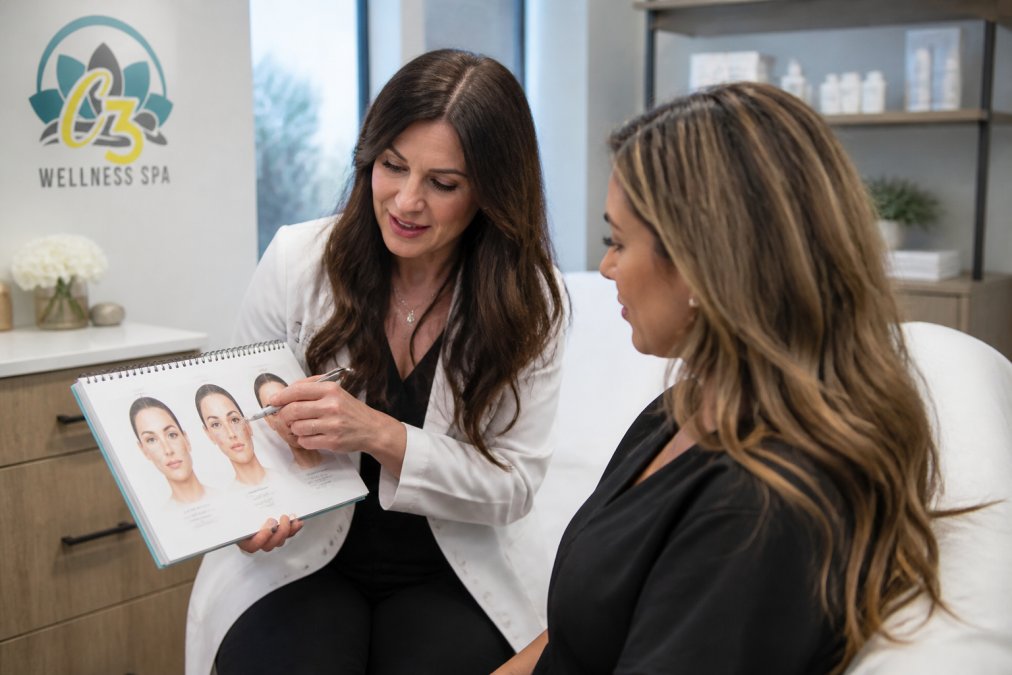
Medical Director Oversight vs. Standalone Esthetician
An esthetician is trained in skin care: cleansing, exfoliation, facials, and surface-level treatments. A physician brings medical training in anatomy, physiology, and complication management that estheticians simply do not receive.
In a physician-led practice, the medical director sets treatment protocols, reviews patient histories for contraindications, and is available when something goes wrong. In a standalone esthetician setting, that layer of clinical governance often does not exist. The person performing your treatment may be skilled at technique but lacks the authority or training to handle a vascular emergency.
This is the core difference: oversight is a system, not a single appointment.
How Medical Spa Safety Standards Protect You
Medical spa safety standards are the clinical protocols that govern how treatments are planned, performed, and monitored, including patient screening, sterile technique, and emergency response. These standards separate a medical practice from a beauty salon.
A thorough skin health assessment comes first. A physician-led team reviews your medical history, allergies, medications, and prior procedures before recommending anything. That intake process catches the contraindications that cause most complications.
Emergency Protocols and Complication Management
Complication management is where physician oversight proves its worth. The most serious risk in injectable treatments is vascular occlusion, where filler blocks a blood vessel and can damage tissue if not treated quickly.
Physician-led practices maintain emergency protocols for exactly this scenario. That includes having hyaluronidase on hand to dissolve hyaluronic acid filler, recognizing the early warning signs of tissue compromise, and knowing when to escalate care. A provider without medical training may not recognize the problem until damage has progressed.
Ask any provider you’re considering two questions: what emergency protocols do you follow, and who is available if a complication occurs after hours?
The Benefits of Physician-Led Aesthetics: Clinical Expertise and Natural Results
The benefits of physician-led aesthetics come down to three things: clinical expertise, evidence-based treatment planning, and natural-looking results. When a physician plans your treatment around your anatomy and goals, the outcome is subtler and safer than a one-size-fits-all approach.
What ‘Physician-Led’ Actually Means, and How It Differs From ‘Physician-Supervised’
This is the distinction most marketing pages skip, and it is the one that should drive your decision. In a physician-led practice, a licensed physician holds clinical authority: they set the protocols, review patient histories, approve treatment plans, and remain accountable for outcomes. In a physician-supervised arrangement, a physician’s name may appear on the door, but the physician may never see your chart, may not be on site, and may have only nominal involvement in the treatment you receive.
Evidence-Based Planning, Not Trend-Based Planning
Evidence-based decision making means treatment choices are grounded in what the clinical literature and the provider’s training support, not in whatever technique is trending on social media. In practice, that looks like:
- Conservative dosing. Starting with less product and adding at a follow-up visit rather than overfilling in one session.
- Staged treatment. Spacing interventions so the skin and underlying tissue can respond, and so the provider can assess how your face actually reacts.
- Product selection matched to the goal. Different hyaluronic acid fillers have different viscosities and lift capacities; a physician chooses based on the anatomical plane and the result you want, not on a single house product.
- Contraindication screening. Reviewing medications (including blood thinners), autoimmune conditions, pregnancy status, and prior procedures before anything is injected.
Why Natural Results Are a Clinical Outcome, Not a Style Choice
Natural results follow from conservative, staged treatment planning. Rather than chasing volume in a single session, a physician-led approach builds gradually, assesses how your skin responds, and adjusts. This is also where long-term anti-aging strategy enters: collagen stimulation and preventative care matter more over a decade than any single treatment. A physician can also integrate aesthetic care with your broader health picture, for example, recognizing that a medication you take for another condition affects bruising or healing, or that a skin change warrants a medical workup rather than another filler syringe.
The best aesthetic outcomes come from treatment planning grounded in anatomy, evidence, and restraint, not from doing the most in one visit. And the phrase ‘physician-led’ should mean a physician who actually holds clinical authority over your care.
Risks of Non-Physician Aesthetic Treatments
The risks of non-physician aesthetic treatments are real and largely preventable. When injectables are performed without clinical oversight, the most common problems are asymmetry, overcorrection, infection, and unrecognized vascular complications.
| Risk | Why It Happens | How Physician Oversight Reduces It |
|---|---|---|
| Vascular occlusion | Filler enters a blood vessel | Trained recognition and hyaluronidase on hand |
| Overcorrection | Aggressive single-session dosing | Staged, anatomy-based treatment planning |
| Infection | Lapses in sterile technique | Clinical protocols and medical-grade standards |
| Missed contraindication | Incomplete health screening | Physician-reviewed intake and history |
The most dangerous complication in filler treatment is unrecognized vascular occlusion. If a provider cannot explain their emergency protocol, that is your signal to go elsewhere.
How to Choose a Medical Aesthetic Provider
Choosing a medical aesthetic provider means verifying who holds clinical responsibility for your care. Look for a named medical director, clear credentials, and a team that can explain its safety protocols without hesitation.
Credentials to confirm:
- A licensed physician serving as medical director
- Injectors with documented training in facial anatomy
- Written emergency and complication protocols
- A clean, medical-grade treatment environment
Questions to Ask During Your Consultation
Ask direct questions and listen for specific answers. Vague responses are a warning sign.
- Who is the medical director, and are they on site or available?
- What happens if I have a complication after hours?
- How do you screen for contraindications before treatment?
- What is your approach to natural-looking results?
- Can I see before-and-after examples of your work?
A physician-led practice will welcome these questions. If a provider seems annoyed by them, that discomfort is itself the answer.
Long-Term Value: Cost, Outcomes, and Preventative Care
The long-term value of physician led aesthetics shows up in outcomes, not just the price of a single session. Correcting a botched procedure costs far more, in money, in recovery time, and in the difficulty of reversing misplaced product, than getting it right the first time. That is the cost-benefit case, and it is worth walking through concretely.
The Real Cost of Corrective Work
When a treatment goes wrong, the correction is rarely a simple fix. Consider the common patterns:
- Overcorrection with filler. Dissolving misplaced hyaluronic acid filler requires hyaluronidase, sometimes multiple sessions, and the result is not always a clean return to baseline. You pay for the original treatment, the dissolving sessions, and often a rebuild.
- Vascular occlusion. If filler blocks a blood vessel and tissue is compromised, the cost escalates from a cosmetic correction to urgent medical care, possible scarring, and in serious cases, skin necrosis. This is the outcome physician-led emergency protocols exist to prevent.
- Asymmetry and migration. Product placed in the wrong plane can migrate, creating an uneven result that takes repeated visits to manage.
- Infection. A lapse in sterile technique can turn a routine appointment into a medical problem requiring antibiotics or drainage.
Prevention Is the Underpriced Part of Aesthetic Care
Preventative care is the part most people overlook. Consistent, conservative treatment and genuine skin health management, including collagen stimulation, sun protection, and skin elasticity support, produce better results over years than sporadic aggressive sessions. Think of it the way you would think about dental care: regular maintenance costs less, and hurts less, than waiting for a crisis.
What ‘Value’ Should Actually Mean to You
Value in aesthetics is not the lowest price per syringe. It is the total cost of getting the result you want, safely, without needing to undo someone else’s work. When you compare providers, weigh:
- Who holds clinical responsibility for the outcome
- Whether emergency protocols and reversal agents are on hand
- Whether the provider tracks your results over multiple visits
- Whether treatment is planned around your anatomy and health history, or sold as a package
Ask any provider what their plan is if you are unhappy with a result six months later. A physician-led practice will have a clinical answer. A transactional one usually will not.
Frequently Asked Questions
What does physician-led aesthetics mean for patient safety?
Physician-led aesthetics means a licensed physician oversees all treatments, from injectables to laser therapy. This includes reviewing your health history, creating a treatment plan, and being available for complications. Medical spa safety standards require protocols for emergencies like vascular occlusion. A physician’s clinical expertise ensures early recognition and management of adverse events, which is critical for safe outcomes.
Are physician-led aesthetic treatments more effective?
Physician-led treatments often produce more consistent, natural-looking results because the provider has advanced anatomical knowledge and training. They can adjust techniques based on your unique facial structure and skin elasticity. Evidence-based decision making also means they choose medical-grade technology and products with proven safety profiles. This leads to better aesthetic outcomes.
What qualifications should I look for in an aesthetic provider?
Look for a provider with clinical oversight by a licensed physician, board certification in a relevant specialty, and training in complication management. Ask about their experience with dermal fillers and neurotoxins, and whether they have emergency protocols in place. A reputable provider will also perform a skin health assessment and discuss risks openly. When learning how to choose a medical aesthetic provider, prioritize credentials and safety standards.
Are non-physician aesthetic treatments risky?
Non-physician treatments carry higher risks because the provider may lack in-depth anatomical knowledge and emergency training. Complications like vascular occlusion, burns, or asymmetry can occur. Without clinical oversight, these issues may go unrecognized or untreated. Understanding the risks of non-physician aesthetic treatments helps you make an informed choice. Always verify that a physician is supervising your care.